
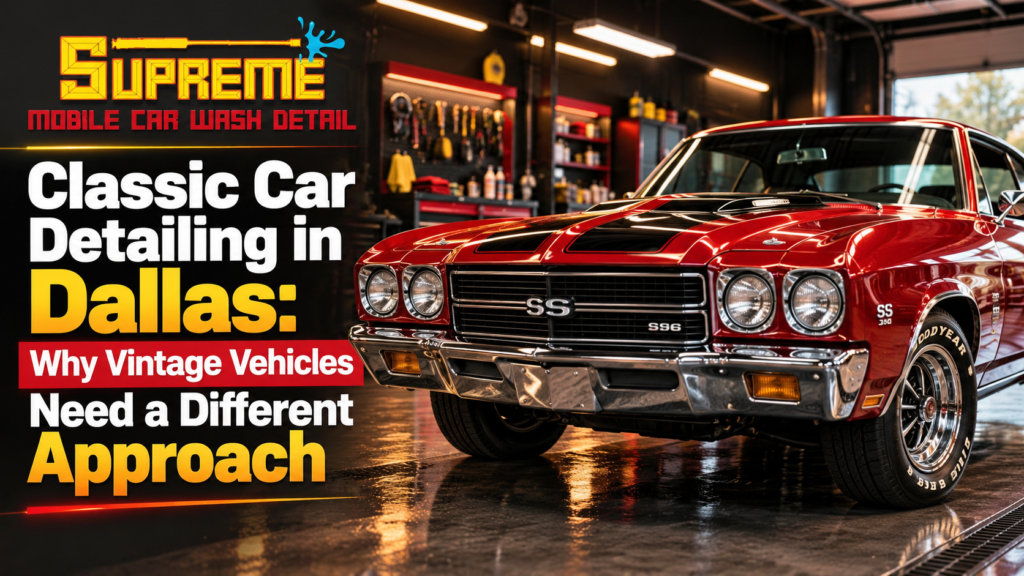
Classic car detailing in Dallas should begin with the vehicle’s materials, repair history, and preservation goals. A vintage car may have original paint, replacement panels, delicate trim, and an interior assembled from several different materials. Its age alone does not tell a detailer which products or methods are appropriate.
The goal is to improve cleanliness and appearance without unnecessarily altering surfaces worth preserving. That requires more assessment than applying a standard package to every panel. This guide explains what owners should discuss before an appointment and why paint, seals, brightwork, and interior condition all influence a sensible detailing plan.
Decide What You Want to Preserve
Start by identifying the desired result. An original survivor, a recently restored vehicle, and a frequently driven classic may need different priorities.
For an original car, preserving existing finishes may matter more than removing every visible mark. A restored vehicle may have newer paint but retain fragile trim or original upholstery.
Tell the detailer which surfaces are original, which have been replaced, and where previous work has occurred. Bring available paint or restoration records.
Also identify details that should remain unchanged. Patina, aged finishes, and evidence of the vehicle’s history should not be mistaken for defects that automatically need aggressive correction.
A useful plan distinguishes cleaning from restoration. Detailing cannot replace missing plating, rebuild cracked upholstery, or repair failing paint.
Identify the Paint Before Choosing a Polish
A classic can have single-stage paint, a basecoat-and-clearcoat finish, or different systems on separate panels. A repaint may also have changed the original specification.
Single-stage finishes combine color and gloss in the exposed topcoat. Clear-coated finishes place a transparent layer over the color. That distinction matters when assessing the surface.
Do not assume that every older vehicle lacks clear coat or that a restored car has uniform paint throughout. Prior repairs and repainting need consideration.
Supreme Mobile Car Wash Detail’s Dallas mobile detailing services provide a starting point for discussing the vehicle and its history. Share those details before agreeing to polishing across the entire exterior.
Assess Condition, Not Just Gloss
Look for cracking, peeling, exposed primer, staining, or inconsistent appearance between panels. Some problems require paint repair rather than detailing.
Thickness measurements can help inform an assessment where the instrument suits the substrate. They do not automatically establish the thickness of the remaining clear coat or guarantee that a defect can be removed safely.
A conservative test area helps determine how a surface responds. The proposed result should reflect what the paint can tolerate, not a promise to remove every imperfection.
Wash Around Aging Seals and Sensitive Areas
Inspect weatherstripping, window seals, trim attachments, and any known leaks before washing. Loose components and failed seals should be identified rather than discovered through water intrusion.
The cleaning method should suit the vehicle’s condition. Avoid directing concentrated water into vulnerable gaps, open vents, or damaged seals.
Check dirt around badges, panel edges, and decorative trim without forcing tools into fragile areas. Cleaning access can be limited where old attachments are loose.
Plan careful drying as well. Water trapped around trim and openings deserves attention, but drying equipment must be used in a way that does not disturb weak parts.
If the vehicle has a convertible top, identify its material and condition separately. Fabric and vinyl should not automatically receive the same products or treatment.
Treat Brightwork and Exterior Trim Individually
Chrome, polished aluminum, painted metal, rubber, and plastic can appear side by side on a classic. Their cleaning and polishing needs differ.
Identify the finish before using a metal polish. A product intended for bare metal may not suit a plated, painted, or coated component.
Pitting or missing plating cannot simply be polished back into existence. Discuss realistic improvement before asking for a uniform shine across aging brightwork.
Check badges, delicate ornament, and trim clips during the initial review. Some items may need repair before detailed cleaning.
For rubber and plastic, choose compatible care rather than a glossy dressing by default. The owner may prefer a restrained appearance consistent with the rest of the vehicle.
Adjust Interior Cleaning to the Actual Materials
Vintage interiors may contain leather, vinyl, cloth, carpet, wood veneer, and aged adhesives. Replacement upholstery can introduce materials unlike the factory originals.
Begin with gentle removal of loose debris and a review of damage. Tears, loose seams, flaking finishes, and brittle components can limit what cleaning will achieve.
Control Moisture and Agitation
Avoid assuming that heavy shampooing or steam suits every interior surface. Headliners, door panels, and other bonded materials need a method appropriate to their condition.
Cleaning should not leave cushions or carpet unnecessarily wet. Discuss drying requirements and when the vehicle will be ready for normal use.
Leather and vinyl also need different care. Identify the surface rather than choosing a conditioner because the seat looks like leather.
Be cautious around switches, instruments, and older electrical components. Their location and condition should influence the cleaning approach.
Plan the Work Around Dallas Conditions
Arrange a work area that allows controlled cleaning and inspection. Shade, surface temperature, and exposure to blowing debris matter when products are applied.
Let hot panels cool before treatment. Follow the product instructions for application conditions rather than trying to finish quickly on a heated surface.
For a mobile appointment, discuss the available space and any requirements in advance. The vehicle should be accessible without crowding delicate bodywork against nearby objects.
Use an initial classic vehicle detailing inquiry to share photographs, the paint history, and specific concerns. This helps define a useful scope before deciding which package fits.
Conclusion
Classic car detailing in Dallas should protect the vehicle’s character while improving the surfaces that can be treated responsibly. Share the restoration history, identify sensitive materials, and agree on realistic goals before washing or polishing begins. Ask how the work will address paint, trim, seals, and the interior individually. Supreme Mobile Car Wash Detail can discuss its detailing options around that information. A thoughtful scope helps preserve valuable original details and avoids pursuing a uniform shine at the expense of the vehicle’s condition.
FAQ's
No. The paint’s condition and preservation goals determine whether correction is appropriate. Some finishes are better served by careful cleaning and compatible protection.
It cannot repair missing metal or restore a failing paint system. Those conditions need the appropriate repair assessment.
No method is automatically safe on every surface. Product choice, condition, technique, and the amount of correction all matter.

 ICONIER Digital Agency