
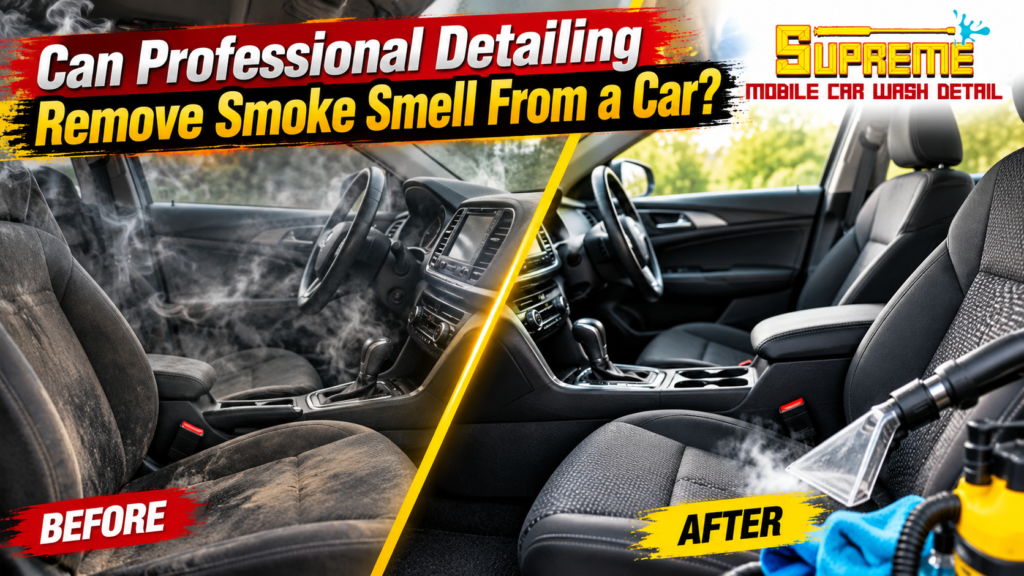
Professional detailing can often reduce or remove smoke smell from a car, but the result depends on how much residue remains and where it has settled. A lightly affected interior is a different challenge from a vehicle exposed to smoking for years. Cleaning must address the sources rather than simply add a stronger fragrance.
Smoke odor can come from upholstery, carpet, hard surfaces, and other parts of the cabin. Some contamination may extend beyond the areas included in a normal detailing package. This guide explains what a useful cleaning plan involves, why smells sometimes return, and how to set realistic expectations.
Why Smoke Smell Persists After Airing Out
Opening windows can exchange cabin air, but it does not remove all residue left on interior materials. That residue can continue contributing to the smell after the car is closed again.
Fabric seats, carpet, and headliners provide different cleaning challenges from glass or a hard console. Hidden areas beneath seats or around trim may also retain contamination.
Do not judge the problem only while doors are open or a fragrance is fresh. Assess the cabin under ordinary conditions after it has been closed.
Be specific about the odor’s history. Tell the detailer whether the vehicle was smoked in occasionally, regularly, or by a previous owner whose habits are unknown.
Also clarify the source. Tobacco smoke, fire damage, and odors associated with a mechanical problem do not necessarily call for the same response.
What Interior Detailing Can Address
A useful scope starts with removing loose debris and identifying affected materials. It then applies cleaning methods suited to the upholstery, carpet, and hard surfaces.
Supreme Mobile Car Wash Detail’s interior detailing services in Dallas provide a starting point for discussing cabin cleaning. Confirm which tasks are included for the actual smoke-odor concern rather than assuming every package covers every surface.
Fabric Seats, Carpet, and Mats
Vacuuming removes loose material, while appropriate deeper cleaning can address contamination within accessible fibers. The method and amount of moisture should suit the material and its condition.
Cleaning the visible seat surface does not establish that the cushion beneath it is fully addressed. Heavily affected padding can require further assessment.
Removable mats should be considered separately from the carpet underneath. Ask whether accessible areas around seat bases and beneath floor mats are included.
Hard Surfaces and Glass
Residue can remain on dashboards, door panels, consoles, and glass. These surfaces need compatible cleaning, not just a scented wipe.
Products and technique must suit screens, switches, coatings, and textured surfaces. Flooding a dashboard with cleaner creates a different problem.
Headliners and Other Bonded Materials
A headliner may contribute to odor, but excessive wetting or aggressive treatment can damage its assembly. Ask how its condition affects the proposed method.
The same caution applies to bonded trim and other delicate interior finishes. Odor treatment should not ignore the risk of damaging the material being cleaned.
Check the Air-Conditioning System and Cabin Filter
An odor that becomes stronger when the fan runs deserves a separate review. It may involve the cabin filter or areas within the ventilation system.
A detailer can discuss accessible vent cleaning, but that does not mean the entire HVAC system has been cleaned. The work included in a detailing appointment should be clear.
Check the vehicle’s maintenance guidance for cabin-filter inspection and replacement. A suitable replacement may be helpful where the old filter is affected, but it is not a substitute for cleaning the rest of the cabin.
If the smell seems related to a mechanical fault or persists specifically through the ventilation system, arrange the appropriate service assessment. Avoid treating every vent odor as a problem a fragrance can solve.
Understand Deodorizing and Ozone Limits
Deodorizing products and treatments differ. Ask what a proposed process does and whether it supplements actual residue removal or merely masks the smell.
Ozone is sometimes marketed for odor treatment, but it is not an automatic answer. The EPA cautions that ozone can irritate the lungs, may create harmful reaction products, and is not broadly effective at removing pollutants at concentrations that meet public health standards.
Do not run an ozone generator in an occupied vehicle or assume that the absence of an ozone smell proves safe conditions. This is not a routine do-it-yourself cleaning step.
If a provider proposes a specialty treatment, ask about material compatibility, exposure controls, and re-entry requirements. Do not assume Supreme Mobile Car Wash Detail includes a particular treatment without confirming its service scope.
Why the Smell May Return After Cleaning
Residual contamination may remain in areas beyond the initial cleaning. A fragrance can also make the cabin seem improved temporarily without resolving the source.
Wet upholstery introduces another complication. The interior needs appropriate drying before normal use so the result can be evaluated without lingering moisture.
Ask when and how to assess the completed work. A sensible review considers the cabin after materials are dry and any strong cleaning fragrance has diminished.
If odor returns, identify where and when it is noticeable. Those observations help determine whether accessible surfaces need another pass or whether a separate component requires investigation.
Set Expectations Before Booking
Describe the odor honestly and request a scope based on the affected areas. Ask about cleaning access, drying, and what happens if deeper contamination is discovered.
Clarify whether filter replacement, seat removal, or other extra work is included. Removing seats can involve electrical and restraint-system considerations and should not be assumed part of ordinary cleaning.
Use an interior detailing inquiry to share the vehicle type and odor history. Ask for a realistic explanation of the likely improvement rather than a guarantee based only on photographs.
Odor reduction also does not certify that every smoke-related chemical has been removed. A fresh-smelling cabin and complete elimination of residue are different claims.
Conclusion
To remove smoke smell from a car, focus on identifying and cleaning the sources, then evaluate the interior after it has dried. Upholstery, hard surfaces, headliners, and ventilation-related concerns need different consideration. Ask what the service covers and which conditions may require further work. Supreme Mobile Car Wash Detail can discuss interior cleaning options based on the vehicle and odor history. Clear expectations help you pursue meaningful improvement without confusing a pleasant fragrance with complete residue removal.
FAQ's
It may mask the odor temporarily. It does not establish that residue has been removed from surfaces or upholstery.
The accessible surface may be easier to wipe than fabric, but seams, padding, carpet, and other cabin materials can still retain odor.
Yes. The extent and location of contamination can require additional cleaning, component assessment, or replacement beyond an initial detail.

 ICONIER Digital Agency