
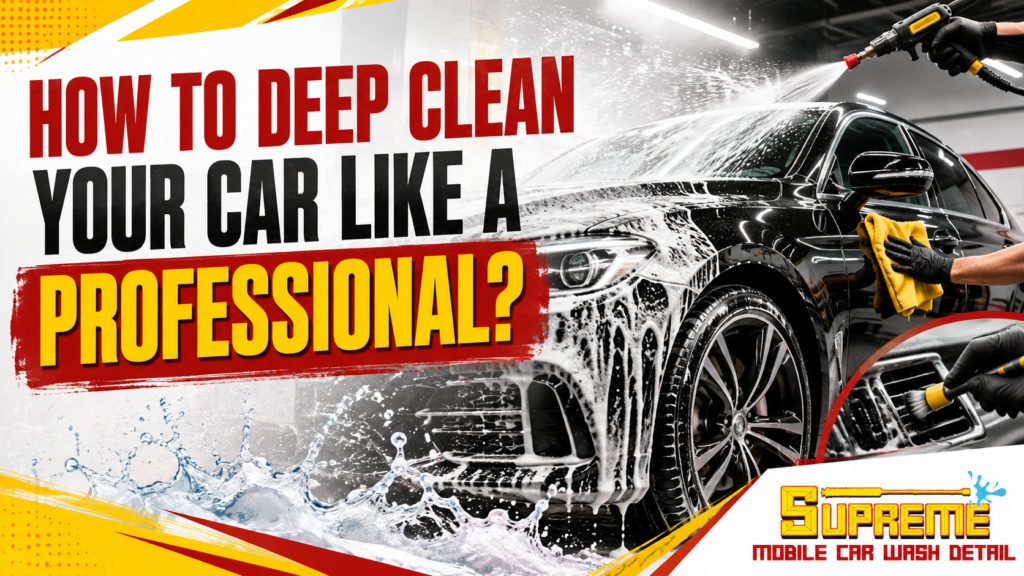
A proper deep clean removes dirt, dust, stains, odors, and grime that a quick wash often misses. If you want to deep clean your car like a professional, the key is to work in the right order, use suitable products, and pay attention to overlooked areas.
You do not need a detailing shop to get strong results. With a vacuum, microfiber towels, brushes, automotive-safe cleaners, and patience, professional-style car detailing at home is possible.
What You Need Before You Start
Gather your supplies before cleaning so you can work efficiently and avoid using the wrong product on delicate surfaces.
Useful items include:
- Vacuum with narrow attachments
- Microfiber towels
- Soft detailing brushes
- Interior and upholstery cleaner
- Automotive glass cleaner
- Car shampoo and wash mitt
- Wheel and tire brushes
- Microfiber drying towel
- Wax or paint sealant, if desired
Avoid harsh household cleaners unless they are confirmed safe for automotive use. Vehicle interiors may include leather, plastic, fabric, screens, and coated trim that need different care.
Step 1: Remove Trash and Personal Items
Empty the vehicle before you start. Remove bottles, papers, floor mats, charging cables, and anything stored in door pockets or the center console.
Check underneath the seats, between seat rails, inside cup holders, and throughout the trunk. Shake loose dirt from the floor mats outside the vehicle.
Clearing the cabin first gives you access to every surface and keeps you from cleaning around clutter.
Step 2: Vacuum the Interior Thoroughly
Vacuuming is a major part of car interior deep cleaning. Start with the seats and upper areas, then work down toward the carpet and floor.
Use narrow attachments around seat seams, under the seats, between seats and the console, floor edges, door pockets, pedal areas, and trunk corners.
Move the seats forward and backward to reach hidden debris. For pet hair, loosen it with a rubber brush or pet-hair tool before vacuuming.
Removing loose dirt first makes later cleaning more effective.
Step 3: Clean the Dashboard, Console, and Door Panels
Spray interior cleaner onto a microfiber towel rather than directly onto screens, switches, or dashboard surfaces.
Wipe the dashboard, steering wheel, gear selector, cup holders, center console, door handles, and door panels. Use a soft detailing brush around vents, seams, buttons, and textured trim.
For sticky cup holders or tight spaces, lightly agitate the cleaner with a brush, then wipe away the loosened grime. Avoid leaving surfaces excessively wet, especially around electronics.
Step 4: Deep Clean Seats and Carpets
The cleaning method depends on the material.
Fabric Seats and Carpets
Vacuum first, then apply a suitable upholstery cleaner according to the product directions. Work in small sections and gently agitate stained areas with a soft brush.
Blot or extract excess moisture rather than soaking the fabric. Too much water can increase drying time and may leave unpleasant odors.
Leather Seats
Use a cleaner made for automotive leather. Apply it with a microfiber towel or soft brush, then wipe away residue.
If the leather type allows it, follow with a suitable conditioner. Avoid aggressive scrubbing because many modern leather surfaces have protective coatings that can be damaged by harsh products or friction.
Step 5: Clean the Interior Glass
Clean windows and mirrors after the main interior surfaces are finished so dust or cleaner overspray does not land on fresh glass.
Use automotive glass cleaner with a clean microfiber towel. Wipe the windshield carefully, including the lower edge where haze often collects.
For fewer streaks, use one towel to clean and a second dry towel to buff. Do not forget side windows, rear glass, and mirrors.
Step 6: Wash the Exterior From Top to Bottom
A professional car cleaning process should reduce unnecessary contact with dirt that could scratch the paint.
Rinse the vehicle first to remove loose debris. Then wash from the roof downward using car shampoo and a clean wash mitt. Work section by section and rinse the mitt often.
Clean the lower doors and heavily soiled areas last because they usually hold more road grime. Use separate tools for wheels and tires, and never use a dirty wheel towel on painted body panels.
Rinse thoroughly and dry with a clean microfiber drying towel.
Step 7: Clean Wheels and Exterior Details
Use a wheel cleaner suitable for the wheel finish and agitate dirt with a wheel brush. Clean tire sidewalls separately, then rinse everything thoroughly.
Pay attention to door jambs, grille openings, emblems, mirror edges, the fuel door, and trunk or hatch seams. These small areas often make deep car cleaning look more complete.
Step 8: Add Paint Protection
After washing and drying, consider applying wax, sealant, or another paint-protection product suitable for your vehicle.
This step is optional, but it can improve gloss and add a protective layer against everyday contamination. Always follow the product directions and avoid applying products to excessively hot paint.
Car Deep Cleaning Tips for Better Results
These habits can improve DIY car detailing:
- Work from cleaner areas toward dirtier areas.
- Use separate towels for glass, paint, wheels, and interior surfaces.
- Test unfamiliar cleaners in a hidden area first.
- Avoid using more product than necessary.
- Replace dirty towels instead of spreading grime.
- Let seats and carpets dry fully.
- Clean spills quickly before they become harder to remove.
These car cleaning and detailing tips also make routine maintenance easier.
How Often Should You Deep Clean Your Car?
There is no single schedule for every vehicle. How often you need deep cleaning depends on driving habits, weather, passengers, pets, food spills, and general use.
A vehicle that regularly carries children or pets may need car interior cleaning more often than a lightly used car. Regular vacuuming, wiping, and exterior washing can reduce how much work is needed during a full detail.
Rather than waiting for heavy buildup, clean problem areas when you notice them.
Conclusion
Learning how to clean your car like a professional is mostly about following a careful process instead of rushing. Start with clutter removal and vacuuming, clean each interior material correctly, finish the glass, then wash the exterior from top to bottom.
To deep clean your car successfully, work in sections, use products designed for automotive surfaces, and keep towels and tools clean. Regular maintenance between deep-cleaning sessions will make future detailing easier and help the vehicle stay cleaner for longer.
FAQ's
Yes. Car detailing at home can produce excellent results when you use automotive-safe products, clean tools, and an organized process. Specialized equipment can help with difficult jobs, but it is not required for basic deep cleaning.
A practical order is to remove clutter, vacuum, clean interior surfaces, clean seats and carpets, clean the glass, wash the exterior, clean the wheels, dry the vehicle, and apply protection if desired.
Either approach can work, but completing the interior first and washing the exterior afterward is convenient for many people. The main goal is to follow a consistent process and avoid transferring dirt between tools and surfaces.

 ICONIER Digital Agency